
Case file · #3xn5qhpk9dr3

Meteor over London: fast-moving green streak of light, Oct 27, 2026

London, England, GB · Oct 27, 2026, 9:15 PM GMT · reported by WTH Team · 0 witnesses

Space rock, confirmed

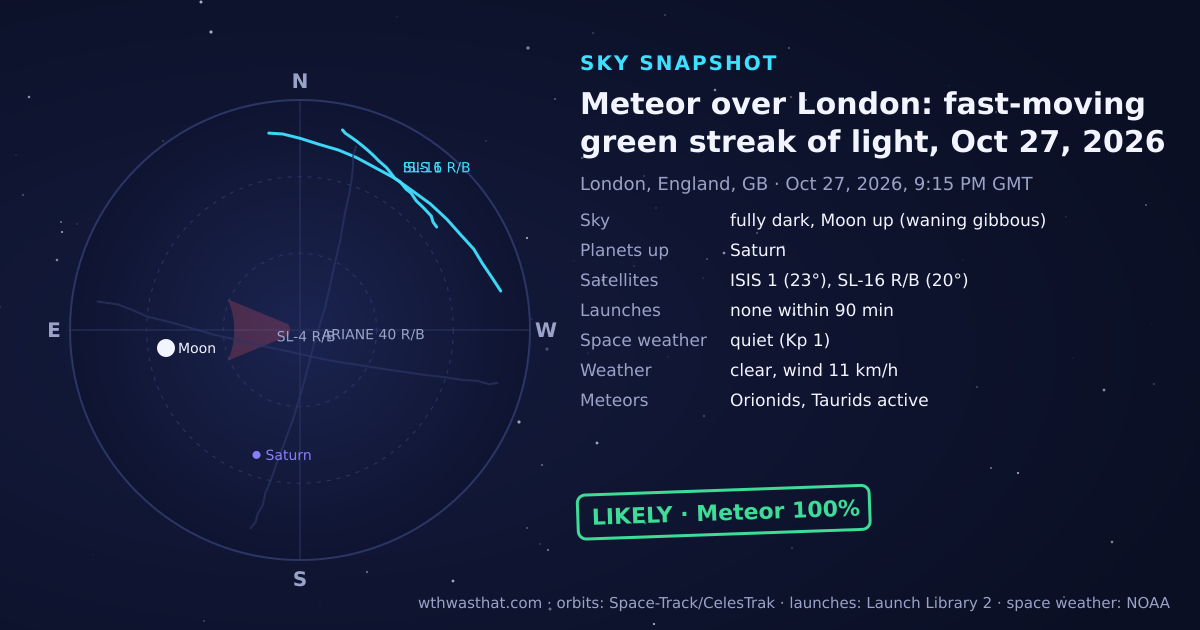
Sky Snapshot frozen for 9:15 PM ±15 min

NSEWISIS 1SL-16 R/BARIANE 40 R/BSL-4 R/BSaturnMoon
9:15 PM
Sky
fully dark
Moon
waning gibbous, 37° up
Planets up
Saturn (38°)
Bright stars
Vega (west 38°), Capella (northeast 37°), Betelgeuse (east 4°), Altair (west 27°)
Weather
clear, wind 11 km/h
Space weather
quiet (Kp 1)
Sunset
4:42 PM

Download the snapshot card · share it anywhere

What the witness saw

When
Oct 27, 2026, 9:15 PM GMT
Where
London, England, GB
Looking
east, high in the sky
Lasted
5 seconds
Looked like
one, green, streak, fast, with a trail
Sound
none

Example case (staff): a green streak flashed across the sky from east to west in under two seconds, broke into two pieces at the end. No sound.

Report a problem

Ranked explanations

  1. Meteor or fireball Likely100%
    • +35Over in seconds: that is a meteor.
    • +20Very fast streaking motion fits.
    • +15A streak or trail is the meteor signature.
    • +15Breaking into pieces is classic fireball behavior.
    • +5Green, blue or orange flashes come from the glowing metals in a meteoroid.
    • +4The Orionids and Taurids were active that night.
  2. Bird, bat or insect lit by a light Doesn't fit33%
    • +30Fast, silent, erratic and brief at night is a bird or bat lit from below by streetlights.
  3. Space debris re-entry Doesn't fit20%
    • +20Multiple fragments traveling together is the re-entry look.
    • +10Glowing trails behind each piece.
    • -15Too brief; a re-entry is slower than a meteor.
    • ·Re-entry predictions (Space-Track TIP messages) are checked when available.

What we checked

  • ✓Satellites: 2 visible passes: ISIS 1, SL-16 R/B
  • ✓Starlink trains: none predicted
  • ✓Launches: none within 90 minutes and 2,500 km
  • –Aircraft: flight history check pending
  • ✓Planets & Moon: Saturn; Moon up
  • ✓Space weather: quiet (Kp 1)
  • ✓Weather: clear, visibility 21 km
  • ✓Meteor showers: Orionids, Taurids
How this answer was computed

We froze the sky for a ±15-minute window around Oct 27, 2026, 9:15 PM UTC at 51.52, -0.14 and scored 19 candidate explanations. Each candidate starts from a base rate and gains or loses points for every detail the witness gave and every record we found; the reasons are listed above with their point values. "Likely" means 80% or more, "Possible" 50–79%, anything below is "Doesn't fit". Nothing above 50% means the case stays unexplained.

Sources: orbital elements from Space-Track/CelesTrak propagated with SGP4 (satellite.js); launch schedule from Launch Library 2; planetary Kp from NOAA SWPC; weather from Open-Meteo; Sun, Moon and planet positions computed locally with astronomy-engine. Engine 0.3.0, snapshot v2, computed Oct 28, 2026, 9:32 PM UTC.

Discussion 0 replies

Sky Investigator AI first look

Here is what the sky data says for London, England, GB at Oct 27, 2026, 9:15 PM GMT: the best fit is Meteor at 100%. Why: Over in seconds: that is a meteor; Very fast streaking motion fits. A couple of things would sharpen this:

• Did it blink or change color at any point?
• Did you get a photo or video, even a blurry one?

Grounded in the sky checks above; it cannot claim more than the data shows. Was this first look helpful?

Report
no account needed